

Average Cost of Carpal Tunnel Surgery (2026): With & Without Insurance
From Dr. Z - Carpal tunnel syndrome specialist

The
average cost of carpal tunnel surgery in the United States typically ranges from
$2,000 to over $15,000, depending on insurance coverage, surgical facility, geographic location, surgeon fees, anesthesia, and rehabilitation costs. Patients paying cash generally pay significantly more than those with insurance.
The average cost of carpal tunnel surgery depends on much more than the operation itself. While the national average is about $6,000, your actual cost can range from just a few thousand dollars to well over $15,000.
Insurance coverage, the surgical facility, surgeon fees, anesthesia, rehabilitation, and even lost income during recovery all influence the final bill.
This guide explains what contributes to those costs, what insurance typically covers, and the expenses many patients overlook before deciding on surgery.
The national average cost of carpal tunnel surgery is approximately $6,000. Patients with insurance generally pay much less out of pocket, while uninsured patients may pay anywhere from $2,000 to more than $10,000, depending on the facility, surgeon, anesthesia, rehabilitation, and geographic location.
Table of Contents
- What is the average cost of carpal tunnel surgery?
- How insurance affects your costs
- What determines the final cost?
- Hospital vs. outpatient surgery center costs
- Open vs. endoscopic surgery costs
- Hidden costs many patients overlook
- Rehabilitation and therapy expenses
- Lost income during recovery
- How to reduce surgery costs
- Is surgery worth the cost?
- Summary
- About Dr. Zannakis
People Also Ask
How much does carpal tunnel surgery cost without insurance?
Patients paying out of pocket often spend anywhere from about $2,000 to more than $15,000, depending on the surgeon, facility, anesthesia, geographic location, and rehabilitation costs.
Does insurance cover carpal tunnel surgery?
Most health insurance plans cover medically necessary carpal tunnel surgery, although you'll usually still be responsible for deductibles, copays, or coinsurance.
Is endoscopic carpal tunnel surgery more expensive?
Yes. Endoscopic surgery generally costs more than open surgery because it requires specialized equipment and additional surgeon training.
Does the quoted surgery price include physical therapy?
Usually not. Occupational therapy, physical therapy, splints, medications, and follow-up visits are often billed separately.
What is the biggest hidden cost of carpal tunnel surgery?
Many patients overlook lost wages during recovery. Depending on your job and recovery time, time away from work can become one of the largest overall expenses.
What is the average cost of carpal tunnel surgery?
The national average cost of carpal tunnel surgery is approximately $6,000, but that number is only a benchmark. What you'll actually pay depends on your insurance coverage, where the procedure is performed, and the type of surgery you have.
Patients with good insurance may owe only a few hundred dollars out of pocket, while those without insurance can expect to pay anywhere from $2,000 to more than $10,000. Recovery costs, rehabilitation, and lost income can increase your total expense even further.
The biggest factors affecting your final cost include:
- Insurance coverage
- Surgical facility (hospital or outpatient center)
- Type of surgery (open or endoscopic)
- Surgeon and anesthesia fees
- Rehabilitation after surgery
- Time away from work
The following sections explain how each of these factors influences the overall cost of carpal tunnel surgery.
Think You Have Carpal Tunnel?
The sooner you identify your symptoms, the easier they are to treat without surgery.
How insurance affects your costs
Health insurance can significantly reduce your out-of-pocket cost for carpal tunnel surgery. However, the amount you pay depends on your deductible, copay, coinsurance, annual out-of-pocket maximum, and whether your surgeon and surgical facility are in your insurance network.
Before scheduling surgery, contact your insurance company and request a written estimate that includes:
- Surgeon fees
- Facility fees
- Anesthesia
- Rehabilitation or therapy
- Follow-up visits
- Your expected out-of-pocket responsibility
If there's a possibility of additional treatment or complications, ask whether those costs would also be covered.
If you don't have insurance, compare prices between hospitals and outpatient surgery centers before scheduling your procedure. The difference can be several thousand dollars.
Use this pricing tool to see what the average carpal tunnel cost is in your state.
What determines the final cost?
Several factors determine how much you'll ultimately pay for carpal tunnel surgery. Some influence the medical bill directly, while others affect your overall financial burden during recovery.
The most important cost factors are:
- Insurance coverage
- Hospital vs. outpatient surgery center
- Open vs. endoscopic surgery
- Geographic location
- Surgeon and anesthesia fees
- Rehabilitation and physical therapy
- Prescription medications
- Time away from work
- Surgical complications
The sections below explain how each of these factors contributes to the total cost.
Hospital vs. outpatient surgery center costs
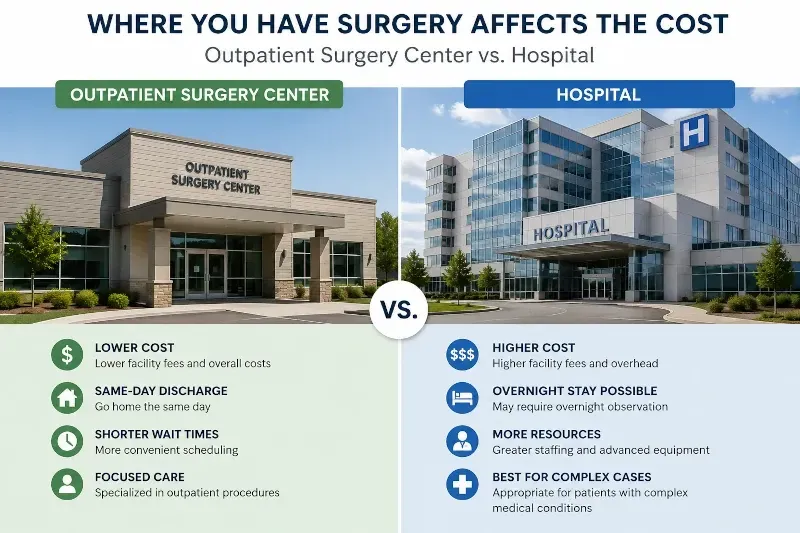
One of the biggest factors affecting the average cost of carpal tunnel surgery is where the procedure is performed.
Most uncomplicated cases can be performed safely in an outpatient ambulatory surgery center, allowing patients to return home the same day. Because these facilities have lower operating costs than hospitals, they generally charge much less for the same procedure.
Hospitals typically have higher facility fees because they provide more extensive staffing, equipment, and patient services. Some patients also require overnight observation or additional medical care, further increasing the total cost.
The table below compares typical national cost estimates for surgery performed in each setting.
Although outpatient surgery centers are usually the more economical option, hospitals may be the better choice for patients with significant medical conditions or those requiring additional monitoring.
Open vs. endoscopic surgery costs
Carpal tunnel release can be performed using either open surgery or endoscopic surgery.
Open surgery generally has a lower upfront cost because it uses standard surgical instruments and is technically less complex. Endoscopic surgery typically costs more because it requires specialized equipment and additional surgeon training.
However, endoscopic surgery may allow some patients to recover more quickly and return to work sooner, reducing indirect costs such as lost income.
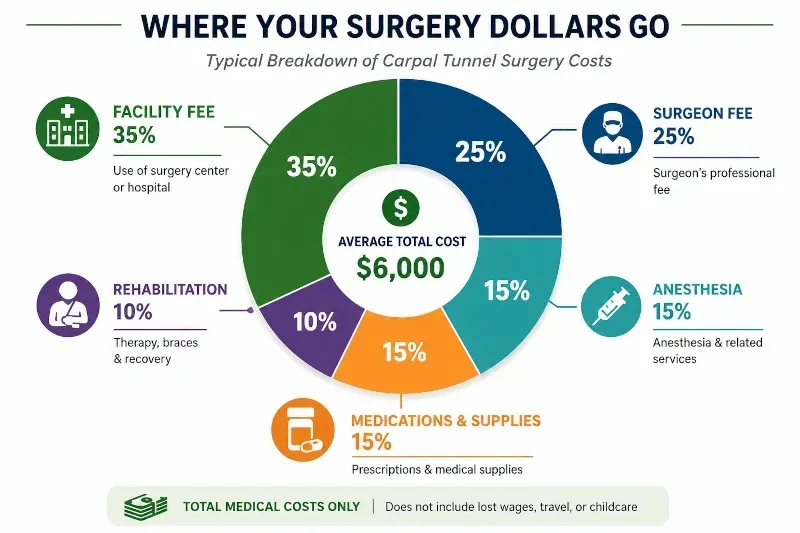
The table below summarizes the typical cost components associated with carpal tunnel surgery.
| Cost Component | Typical Share | Estimated Cost |
|---|---|---|
| Facility Fee | 30% | $1,260–$2,340 |
| Surgeon's Fee | 30% | $1,260–$2,340 |
| Implants & Surgical Supplies | 15% | $630–$1,170 |
| Postoperative Care | 15% | $630–$1,170 |
| Anesthesia | 10% | $420–$780 |
| National Average Total | 100% | $6,000(Typical range: $2,000–$10,000) |
Estimated national averages for 2026. Actual costs vary based on insurance coverage, geographic location, surgical facility, surgeon, and whether complications occur.
For more information about each procedure, see our articles on open carpal tunnel surgery, endoscopic carpal tunnel surgery, and carpal tunnel surgery recovery.
Use this cost guide to see the average carpal tunnel cost in your state.
Hidden costs many patients overlook
The surgeon's bill is only one part of the overall cost of carpal tunnel surgery. Many patients are surprised to discover that additional expenses continue well after the operation.
Common hidden costs include:
- Prescription medications
- Wrist braces or splints
- Follow-up office visits
- Occupational or physical therapy
- Travel to medical appointments
- Lost wages during recovery
Although these expenses may seem relatively small individually, together they can add thousands of dollars to the total cost of treatment.
Rehabilitation, medications, follow-up care, travel expenses, and time away from work often add significantly to the overall cost of carpal tunnel surgery.

Rehabilitation and therapy expenses
Recovery doesn't end when surgery is over. Many patients require occupational therapy, physical therapy, home exercises, or temporary splinting to regain strength and flexibility.
The amount of rehabilitation needed depends on:
- The severity of your carpal tunnel syndrome
- Whether you had open or endoscopic surgery
- Your occupation
- How quickly your hand heals
Patients with uncomplicated surgery often require only limited therapy, while those with severe nerve damage or postoperative complications may need months of rehabilitation.
Because therapy is frequently billed separately, be sure to ask whether your insurance plan covers these services.
Considering Surgery?
Before scheduling an operation, find out whether your symptoms may respond to conservative treatment.
Lost income during recovery
One of the largest expenses associated with carpal tunnel surgery isn't a medical bill—it's lost income.
If your job requires repetitive hand use, gripping, lifting, or operating machinery, you may need to take time off while your hand heals.
Typical return-to-work timelines include:
- Office or computer work: 1–3 weeks
- Light manual work: 3–6 weeks
- Heavy manual labor: 6 weeks or longer
- Complicated recoveries: Several months
Workers who are self-employed or paid hourly often experience the greatest financial impact because every missed workday represents lost income.
How to reduce surgery costs
Although surgery can be expensive, there are several ways to reduce your overall costs.
Before scheduling surgery:
- Verify your insurance benefits.
- Choose an in-network surgeon whenever possible.
- Compare prices between hospitals and outpatient surgery centers.
- Request a written estimate that includes surgeon, facility, and anesthesia fees.
- Confirm whether rehabilitation is covered by your insurance.
- Ask about payment plans if you're paying out of pocket.
During recovery:
- Follow your rehabilitation program carefully.
- Attend all scheduled follow-up visits.
- Perform home exercises consistently to help avoid prolonged therapy.
Planning ahead can help prevent unexpected medical bills and reduce your overall financial burden.
Is carpal tunnel surgery worth the cost?
Whether carpal tunnel surgery is worth the cost depends on the severity of your symptoms, your occupation, and how much your condition interferes with daily life.
Patients with severe nerve compression, constant numbness, thumb muscle wasting, or progressive weakness may benefit substantially from surgery.
However, many people with mild or moderate symptoms improve with conservative treatment, avoiding the expense, recovery time, and risks associated with surgery.
When weighing your options, consider:
- The total cost of surgery
- Recovery time
- Time away from work
- Rehabilitation expenses
- Your likelihood of improvement with nonsurgical treatment
Discuss these factors with your healthcare provider before deciding whether surgery is the best option for your situation.
Summary
The average cost of carpal tunnel surgery is approximately $6,000 nationally, but your actual expense may be considerably higher or lower depending on your insurance coverage, surgical facility, surgeon fees, anesthesia, rehabilitation, and time away from work.
Outpatient surgery centers generally cost less than hospitals, while endoscopic surgery often costs more than open surgery. Hidden expenses—including therapy, medications, and lost wages—can substantially increase the total financial impact.
Before scheduling surgery, request a written estimate and compare all expected costs so there are no surprises during your recovery.
- The national average cost of carpal tunnel surgery is about $6,000.
- Patients with insurance usually pay much less than uninsured patients.
- Outpatient surgery centers are generally less expensive than hospitals.
- Endoscopic surgery often costs more than open surgery.
- Rehabilitation, medications, and lost wages can significantly increase the total cost.
- Request a written estimate before scheduling surgery and verify what your insurance covers.
Sources
The information in this article was compiled from peer-reviewed medical research, government and healthcare resources, and published cost analyses. Surgical prices are national estimates and may vary considerably depending on insurance coverage, geographic location, surgical facility, surgeon, anesthesia, rehabilitation needs, and individual patient circumstances. Readers should contact their healthcare provider and insurance carrier for personalized cost estimates. Supported by the references below.
- American Academy of Orthopaedic Surgeons (AAOS) – Clinical Practice Guidelines for Carpal Tunnel Syndrome.
- American Society for Surgery of the Hand (ASSH) – Patient education and treatment resources.
- National Institute of Neurological Disorders and Stroke (NINDS) – Carpal Tunnel Syndrome Fact Sheet.
- Surgery Cost Guide – National estimates for carpal tunnel surgery costs.
- PubMed (PMID: 35143432) – Clinical research related to outcomes following carpal tunnel surgery.
- U.S. News & World Report – What Is an Ambulatory Surgery Center (ASC)?
- CarpalRx: Open Carpal Tunnel Surgery
- CarpalRx: Endoscopic Carpal Tunnel Surgery
- CarpalRx: Carpal Tunnel Surgery Recovery
- Peer-reviewed publications by Dr. M. Zannakis on soft tissue injury management and upper extremity disorders.
About Dr. Zannakis
Dr. M. Zannakis is Medical Director of CarpalRx and a soft tissue injury specialist with decades of experience evaluating and treating carpal tunnel syndrome and other repetitive strain disorders. He has authored more than 120 medical journal articles and developed the patented CarpalRx® system to help patients reduce median nerve compression through targeted myofascial release therapy.
His goal is to help patients understand their symptoms, receive an accurate diagnosis, and explore effective nonsurgical treatment options whenever appropriate. Through CarpalRx, he has helped thousands of people better understand carpal tunnel syndrome and avoid unnecessary surgery.