

Myofascial Massage for Carpal Tunnel: How It Works & How to Do It
From Dr. Z - Carpal tunnel syndrome specialist
Myofascial massage for carpal tunnel is a hands-on therapy designed to reduce tendon adhesions, improve tendon movement, and relieve pressure on the median nerve. When performed consistently, it may help reduce pain, numbness, tingling, and hand weakness without surgery.
If you have carpal tunnel syndrome, you may have heard that myofascial massage can help relieve symptoms naturally.
This therapy—also called myofascial release massage—is designed to improve tendon movement and reduce pressure inside the wrist joint.
Many patients use myofascial massage to help reduce:
- pain
- numbness
- tingling
- burning
- weakness
- nighttime symptoms
But how does it actually work?
Understanding:
- what causes carpal tunnel syndrome
- how flexor tendons affect the median nerve
- how myofascial massage works
- and how to perform the technique properly
can help you decide whether this treatment may help your symptoms.
- Targets flexor tendons and surrounding soft tissue
- May improve tendon glide and circulation
- Can help reduce pressure on the median nerve
- Requires consistency and proper technique
- Often combined with bracing and stretching exercises
According to the American Academy of Orthopaedic Surgeons, conservative treatment is usually recommended before surgery for most mild and moderate cases of carpal tunnel syndrome.
- What Causes Carpal Tunnel Syndrome?
- How Myofascial Massage for Carpal Tunnel Works
- Surgery vs Myofascial Massage
- How to Perform Myofascial Massage for Carpal Tunnel
- Tips for Better Results
- Do’s and Don’ts of Myofascial Massage
- Myofascial Massage vs Surgery
- Important Warning
- Key Takeaways
- Summary
- About Dr. Zannakis
Here are answers to common questions patients ask about myofascial massage for carpal tunnel syndrome.
Does myofascial massage help carpal tunnel syndrome?
Many patients use myofascial massage to help reduce pain, numbness, tingling, and pressure on the median nerve.
How often should myofascial massage be performed?
Most patients perform massage twice daily for at least 30 days.
Can myofascial massage replace surgery?
Patients with mild or moderate symptoms often try conservative therapy before surgery.
What symptoms can myofascial massage improve?
Massage may help reduce pain, numbness, tingling, weakness, and nighttime symptoms.
Should myofascial massage be painful?
No. Massage should not cause severe pain, worsening numbness, or increasing weakness.
What Causes Carpal Tunnel Syndrome?
Carpal tunnel syndrome develops when pressure increases inside the wrist and compresses the median nerve.
This pressure often occurs because the wrist’s flexor tendons become:
- irritated
- inflamed
- swollen
- restricted in movement
These tendons run from the forearm into the fingers and help control gripping and finger motion.
Repetitive hand activity may gradually create microscopic tendon adhesions and irritation. As irritation increases, tendon movement becomes less smooth and inflammation develops.
When swelling occurs inside the narrow carpal tunnel space, the tendons press against the median nerve.
This nerve compression may cause:
- pain
- numbness
- tingling
- burning
- weakness
- clumsiness
- electric shock sensations
Symptoms usually affect:
- the thumb
- index finger
- middle finger
- part of the ring finger
The pinky finger is usually not affected.
The goal of myofascial massage is to reduce pressure inside the wrist without surgery.
How Myofascial Massage for Carpal Tunnel Works
Myofascial massage works by applying controlled kneading and stretching pressure over the tendons and soft tissues of the wrist and forearm.
The goal is to:
- improve tendon glide
- reduce tissue restriction
- improve circulation
- reduce inflammation
- decrease pressure on the median nerve
As pressure inside the carpal tunnel decreases, symptoms may gradually improve.
Unlike surgery, myofascial massage does not cut ligaments or permanently alter wrist anatomy.
Instead, the therapy attempts to improve soft tissue movement and reduce mechanical stress naturally.
Surgery vs Myofascial Massage
There are two major approaches to relieving pressure on the median nerve:
Surgery creates more space inside the carpal tunnel by cutting the transverse carpal ligament.
Myofascial massage attempts to reduce pressure more naturally by improving tendon movement and reducing soft tissue restriction.
Severe weakness, muscle wasting, or permanent numbness may still require surgical evaluation.
How to Perform Myofascial Massage for Carpal Tunnel
Step 1: Establish a Routine
Consistency is extremely important.
Most patients perform myofascial massage:
- twice daily
- morning and evening
- for at least 30 days
More severe symptoms may require additional time.
Step 2: Apply Lotion
Apply lotion to:
- the palm side of the wrist
- the lower forearm
This helps reduce skin irritation during massage.
Step 3: Position the Hand
Place the hand:
- palm facing upward
- on a firm surface
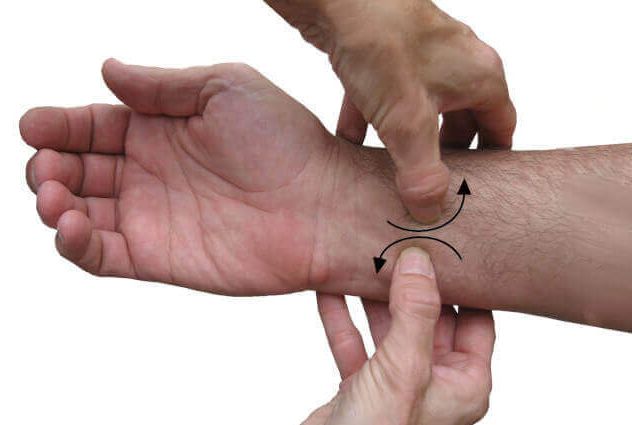
A partner should place both thumbs about 1 inch apart over the wrist and lower forearm area.
Step 4: Perform Circular Motions
The thumbs should move in:
- slow circular motions
- opposite directions
- steady kneading patterns
The skin should appear gently kneaded rather than rubbed aggressively.
Step 5: Move Along the Wrist and Forearm
Avoid massaging only one small area repeatedly.
Instead:
- move gradually
- cover the lower forearm
- work around the wrist area evenly
Step 6: Continue for 15 Minutes
Massage sessions generally last:
- about 15 minutes
- twice daily
Consistency matters more than excessive pressure.
Step 7: Be Patient
Myofascial massage is not an overnight solution.
Because carpal tunnel syndrome often develops gradually over years, improvement with conservative therapy may also occur gradually.
Some symptoms improve faster than others:
- pain may improve earlier
- numbness and tingling often improve more slowly
Tips for Better Results
The following tips may improve your massage experience:
- Perform massage in a quiet, relaxed environment
- Use moderate pressure instead of aggressive force
- Combine massage with nighttime bracing
- Use heat therapy after evening sessions
- Stay consistent with daily treatment
Many patients combine myofascial massage with:
- stretching exercises
- activity modification
- ergonomic changes
- nocturnal wrist bracing
Many hand conditions mimic carpal tunnel syndrome. Take this free self-test to identify the most likely cause of your numbness, tingling, pain, or hand weakness.
Take the Free Self-Test →Do’s and Don’ts of Myofascial Massage
Do
- Stay consistent with daily massage sessions
- Move the massage area gradually around the wrist and forearm
- Use enough pressure to knead tissue comfortably
- Focus on long-term improvement rather than overnight relief
Don’t
- Massage aggressively enough to increase pain significantly
- Focus repeatedly on one small area
- Skip treatments frequently
- Expect immediate results
- Use
vibrating percussion massagers aggressively on the wrist

Here’s how myofascial massage compares with surgery for treating carpal tunnel syndrome:
Myofascial Massage vs Surgery
Myofascial massage should not cause severe pain, worsening numbness, or increasing weakness. If symptoms rapidly worsen, consult a qualified healthcare professional.
- Myofascial massage is a conservative therapy for carpal tunnel syndrome.
- The therapy focuses on improving tendon movement and reducing pressure on the median nerve.
- Consistency and proper technique are important for best results.
- Massage is often combined with stretching, bracing, and activity modification.
- Severe or worsening symptoms may still require medical evaluation or surgery.
Your symptoms may reveal how advanced your condition has become. This free quiz estimates your carpal tunnel stage and explains which treatments may help most.
Take the Free Severity Quiz →Summary
Myofascial massage for carpal tunnel is a conservative therapy designed to improve tendon movement, reduce inflammation, and decrease pressure on the median nerve.
Many patients use this technique to help relieve:
- pain
- numbness
- tingling
- weakness
- nighttime symptoms
Unlike surgery, myofascial massage attempts to improve soft tissue movement naturally without altering wrist anatomy.
For best results, treatment requires:
- consistency
- patience
- proper technique
- long-term commitment
When combined with bracing, stretching, and activity modification, myofascial massage may help many patients manage carpal tunnel symptoms without surgery.