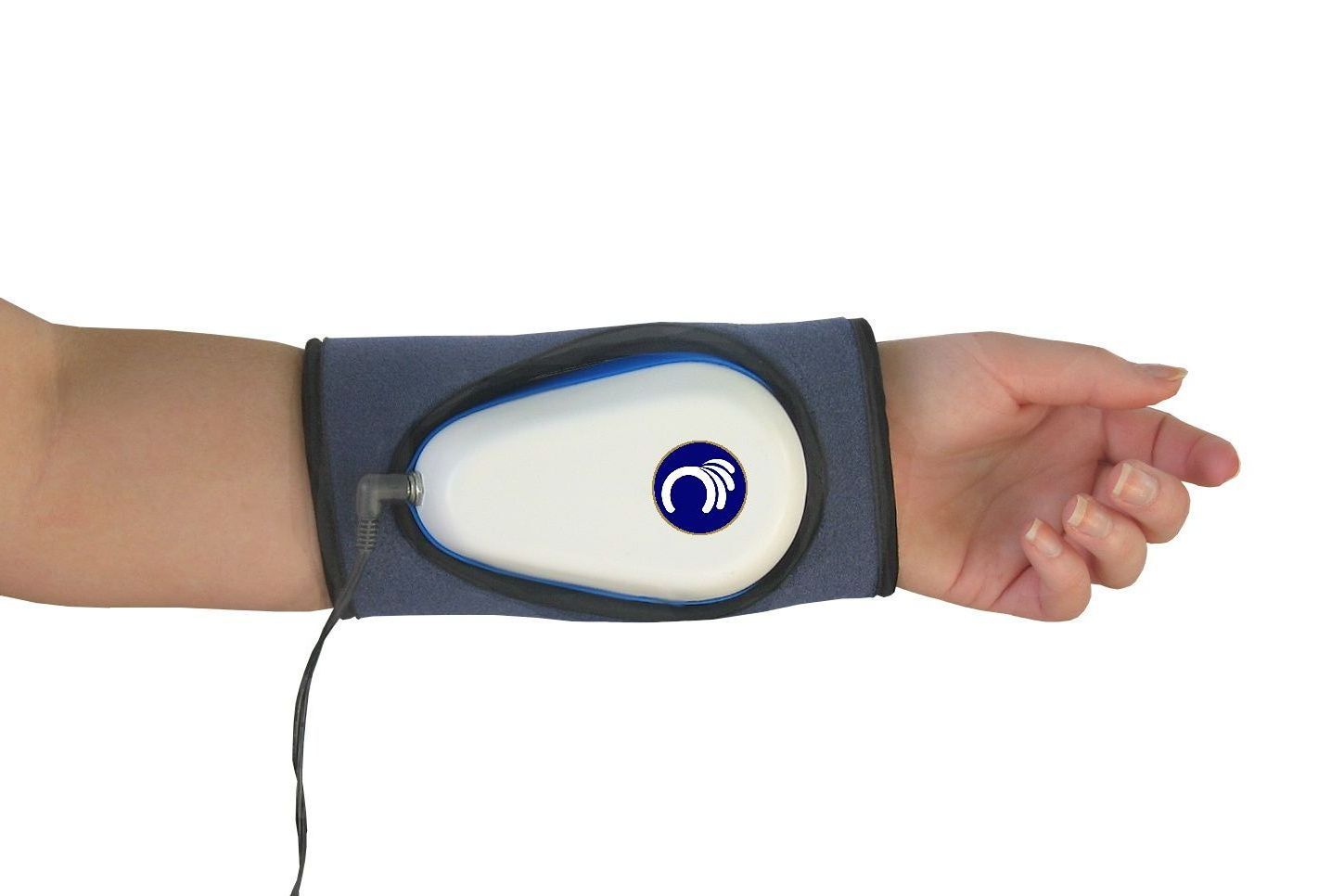
The CarpalRx is a massager for carpal tunnel syndrome designed to reproduce clinical myofascial release therapy. Its patented kneading mechanism helps improve tendon movement, reduce swelling, and relieve pressure on the median nerve without surgery.
Most massagers marketed for hand pain use vibration.
But vibration is not how therapists traditionally treat carpal tunnel syndrome.
More than 20 years ago, physiologist and biomedical engineer Dr. Zannakis developed the CarpalRx massager to reproduce the same slow kneading movements used in clinical myofascial release therapy.
Instead of simply vibrating the wrist, the device was engineered specifically to mobilize stiff tendons, improve fluid drainage, and reduce pressure on the median nerve — the underlying mechanical problem responsible for most carpal tunnel symptoms.
Today, the CarpalRx remains one of the few massagers for carpal tunnel specifically designed around tendon mobilization rather than general muscle massage.
Unlike generic hand massagers, the CarpalRx was specifically engineered around the mechanics of carpal tunnel syndrome and therapeutic tendon mobilization.
A massager for carpal tunnel
should do more than simply vibrate the wrist. The CarpalRx was designed to reproduce clinical myofascial release therapy using slow kneading motions that help improve tendon gliding, reduce swelling, and relieve pressure on the median nerve naturally.
Find Out If You Have Carpal Tunnel — And How Severe It Is
Start with the symptom self-test to see if your symptoms match carpal tunnel syndrome.
If they do, take the severity quiz to estimate how advanced your condition may be.
People Also Ask
Does a massager help carpal tunnel syndrome?
Some massagers may help relieve carpal tunnel symptoms if they improve tendon movement and reduce swelling. Devices using slow kneading motions may be more suitable than vibration-based massagers for irritated median nerves.
What type of massager is best for carpal tunnel?
Massagers designed to reproduce myofascial release therapy may work best because they use slow kneading motions to improve tendon gliding and reduce pressure inside the wrist.
Can vibration massagers make carpal tunnel worse?
In some patients, vibration may aggravate irritated nerves and increase symptoms. Many experts recommend caution with vibration or percussion devices when nerve compression already exists.
How does myofascial release help carpal tunnel syndrome?
Myofascial release uses controlled kneading motions to loosen tendon adhesions, improve circulation, reduce swelling, and restore normal tendon movement inside the wrist.
How often should you use a massager for carpal tunnel?
Many treatment protocols recommend using a therapeutic carpal tunnel massager twice daily for about 15 minutes per session to help improve tendon mobility and fluid drainage.
What Causes Carpal Tunnel Syndrome
Carpal tunnel syndrome develops when pressure increases inside the wrist and compresses the
median nerve.
This usually happens because the flexor tendons become irritated and swollen over time.
Common contributing factors include:
- repetitive hand use
- prolonged gripping
- typing
- forceful finger activity
- tool use
- sustained steering wheel gripping
As the tendons become overworked, microscopic
collagen adhesions form around them. These adhesions interfere with normal tendon gliding and create friction during movement.
Over time:
- inflammation increases
- fluid accumulates
- tendons enlarge
- pressure rises inside the carpal tunnel
That pressure compresses the median nerve and produces symptoms such as:
Effective treatment usually requires reducing pressure while restoring normal tendon movement.
Why Myofascial Release Therapy Helps
Therapists have used
myofascial release techniques for years to help patients with carpal tunnel syndrome.
This therapy uses slow kneading movements applied to the wrist and forearm to mobilize underlying tendon tissue.
As the tissues are manipulated, the therapy may help:
- loosen collagen adhesions
- improve tendon gliding
- reduce
swelling
- improve
circulation
- encourage fluid drainage
This combination helps decrease pressure on the median nerve naturally.
Unlike vibration massage, myofascial release focuses on controlled mechanical movement rather than rapid tissue stimulation.
That difference is especially important when nerves are already irritated.
How the CarpalRx Massager Was Invented
The CarpalRx was developed after Dr. Zannakis’ wife developed
severe carpal tunnel syndrome.
At the time, he became interested in why skilled therapists could often improve symptoms using myofascial release — yet no home device existed that could accurately reproduce those same movements.
Using his background in physiology and biomedical engineering, Dr. Zannakis studied the biomechanics of therapeutic kneading and designed an electro-mechanical system capable of duplicating those motions consistently.
The result became the
CarpalRx massager: a device engineered specifically for carpal tunnel syndrome rather than general muscle massage.
How the CarpalRx Massager Works
The CarpalRx uses
patented orbiting massage heads that both rotate and twirl simultaneously.
This creates a slow kneading motion similar to the alternating thumb pressure used during clinical myofascial release therapy.
Instead of vibrating the tissues, the device gently:
- pushes and pulls tendons in multiple directions
- mobilizes stiff tissue
- improves fluid movement
- reduces swelling
- relieves pressure inside the wrist
The goal is to gradually restore healthy tendon mobility while decompressing the median nerve.
According to
published clinical studies, most patients experience major symptom improvement within approximately 30 days of consistent use.
Why Vibration Massagers May Worsen Carpal Tunnel Symptoms
Many handheld massagers use vibration or percussion technology.
But vibration affects tissues very differently from myofascial kneading.
High-frequency vibration can overstimulate already irritated nerves and may aggravate symptoms in some patients.
Long-term occupational vibration exposure is also associated with
Hand Arm Vibration Syndrome (HAVS), a condition involving nerve and circulation damage.
Symptoms may include:
- numbness
- tingling
- pain
- weakness
- circulation problems
For that reason, many clinicians recommend caution when using vibration-based devices on compressed nerves.
The CarpalRx was intentionally designed around slow kneading motions instead of vibration or percussion.
⚠ Not All Massagers Are Safe for Carpal Tunnel
Many handheld massagers use vibration or percussion technology. While these devices may help sore muscles, vibration can aggravate irritated median nerves and may worsen carpal tunnel symptoms in some patients.
How To Use a Massager for Carpal Tunnel Correctly
Consistent treatment is important for improving tendon mobility and reducing swelling.
According to the recommended CarpalRx protocol, the device should be used:
- twice daily
- approximately 15 minutes per session
Morning Treatment
Helps loosen stiff tendons and reduce overnight fluid accumulation.
Evening Treatment
Helps reduce swelling and fluid buildup caused by daytime hand activity.
With regular use, the goal is to:
- restore tendon flexibility
- improve tendon gliding
- reduce inflammation
- decompress the median nerve
| Feature |
CarpalRx |
Typical Hand Massager |
| Designed specifically for carpal tunnel |
✔ Yes
|
✘ No
|
| Uses therapeutic kneading motion |
✔ Yes
|
Usually vibration |
| Targets tendon mobility |
✔ Yes
|
Limited |
| Designed for daily CTS therapy |
✔ Yes
|
Varies |
| Uses vibration/percussion |
✘ No
|
✔ Yes
|
Not all hand massagers work the same way. Here’s how the CarpalRx differs from traditional vibration-based massagers commonly marketed for hand pain.
Summary
The CarpalRx is a massager for carpal tunnel syndrome designed to reproduce clinical myofascial release therapy rather than simple vibration massage.
Invented by Dr. Zannakis, the device uses a patented kneading mechanism intended to improve tendon mobility, reduce swelling, and relieve pressure on the median nerve naturally.
Its focus on tendon mechanics and fluid drainage makes it fundamentally different from traditional consumer hand massagers marketed for general pain relief.
Key Takeaways
- A massager for carpal tunnel should reduce pressure on the median nerve — not simply vibrate the wrist.
- Carpal tunnel syndrome is commonly caused by swollen flexor tendons and restricted tendon movement inside the wrist.
- Myofascial release therapy uses slow kneading motions to improve tendon gliding and reduce swelling naturally.
- The CarpalRx massager was invented by Dr. Zannakis to reproduce clinical myofascial release therapy at home.
- Unlike traditional vibration massagers, the CarpalRx uses a patented kneading mechanism designed specifically for carpal tunnel syndrome.
- Consistent twice-daily use may help reduce numbness, tingling, pain, burning, and nighttime symptoms.
- Vibration and percussion massagers may aggravate irritated nerves in some patients with carpal tunnel syndrome.
- The CarpalRx was engineered specifically around tendon mobilization and fluid drainage rather than general muscle massage.
Find Out If You Have Carpal Tunnel — And How Severe It Is
Start with the symptom self-test to see if your symptoms match carpal tunnel syndrome.
If they do, take the severity quiz to estimate how advanced your condition may be.
About Dr. Zannakis